
Radishes often get a bad rap for their sharp, peppery punch when raw, but roasting transforms them into something entirely different. This method tames their bite, making each bite tender, subtly sweet, and a little smoky. Pairing them with garlic and herbs elevates their flavor, turning a simple vegetable into a fragrant, comforting side.
I’ve found that roasting radishes is a quiet revelation—no fuss, just toss and bake. It’s a way to enjoy their earthy brightness without that initial peppery punch, especially if you’re serving guests or just craving something more mellow. Plus, the aroma that drifts through the kitchen while they roast is enough to make anyone stop and take a sniff.
Focusing on how roasting radishes transforms their bite, making them tender and subtly sweet, perfect for those who find raw radishes too sharp or peppery. This method unlocks a new side of radishes, turning them into a mellow, aromatic side dish that pairs beautifully with garlic and herbs.
What goes into this dish
- Radishes: I love choosing smaller, firm radishes—they roast evenly and develop a sweet, smoky flavor. Skip the large, watery ones; they can turn mushy fast. The peppery bite mellows out nicely when roasted, revealing a subtle earthiness.
- Garlic: I use thinly sliced garlic to prevent burning, which can turn bitter quickly. Roasted garlic turns soft, sweet, almost like a mild onion, adding depth without overpowering. Be generous—its aroma is irresistible as it roasts.
- Fresh Herbs: I prefer thyme or parsley—they add freshness and brightness. Toss them in halfway through roasting to keep their flavor vibrant. Dried herbs can work, but they tend to turn dull and less fragrant after roasting.
- Olive Oil: I drizzle a good-quality extra virgin olive oil—rich, fruity, and slightly peppery. It helps the radishes caramelize beautifully and adds a glossy finish. A little more oil can make the dish feel richer; too much, and it’s greasy.
- Salt and Pepper: I use flaky sea salt and freshly cracked black pepper—simple and effective. The salt enhances their natural sweetness, and the pepper adds a subtle kick. Adjust to taste after roasting, once flavors are concentrated.
- Lemon (optional): I sometimes squeeze a bit of lemon juice right before serving. It brightens the dish, cutting through the roasted earthiness. The citrus aroma wakes up all the flavors and adds a fresh contrast.
Ingredient Substitutions
- Radishes: I prefer small, firm radishes—they roast evenly and turn sweet and slightly smoky. Skip large, watery ones that can turn mushy fast.
- Garlic: Thinly sliced cloves prevent burning and bitterness. Roasted garlic becomes soft, sweet, almost like a mild onion, adding depth.
- Fresh Herbs: I opt for thyme or parsley for brightness. Toss in halfway through roasting to keep their vibrancy. Dried herbs tend to dull and lose aroma.
- Olive Oil: Use good-quality extra virgin—rich, fruity, helps caramelize and adds gloss. Too much makes it greasy; a little more enriches, less keeps it light.
- Salt and Pepper: Flaky sea salt and cracked black pepper are best. They enhance sweetness and add a subtle kick. Adjust after roasting for perfect balance.
- Lemon (optional): A squeeze before serving brightens the dish, cutting earthiness. The citrus aroma lifts all flavors with a fresh contrast.
- Butter: I sometimes swap olive oil for melted butter for a richer, creamier finish. It adds a nutty undertone but reduces the smoky edge.
Common mistakes and how to fix them
- FORGOT the radishes are best small; larger ones turn watery and dull the flavor.
- DUMPED too much oil; it causes sogginess instead of caramelization and crisp edges.
- OVER-TORCHED garlic; it turns bitter. Slice thin and roast at moderate heat.
- MISSED the herb timing; add delicate herbs late to keep their brightness and aroma.
Make-Ahead and Storage Tips
- Prep radishes and herbs a day ahead—clean, trim, and store in airtight containers in the fridge. They stay fresh for up to 24 hours, and it speeds up your roasting process.
- Roasted radishes can be made up to 2 days in advance. Reheat gently in the oven at 350°F, checking for warmth and slight caramelization, which should revive their smoky sweetness.
- Freezing isn’t ideal for roasted radishes—they can become mushy. Better to keep them fresh and reheat as needed.
- Flavor intensifies as they sit; the earthy sweetness deepens, so expect a slightly mellower taste if stored overnight.
- Reheating releases a fragrant, warm aroma. Check for crispy edges and tender centers—if they lose crunch, give them a quick blast in the oven to crisp up again.
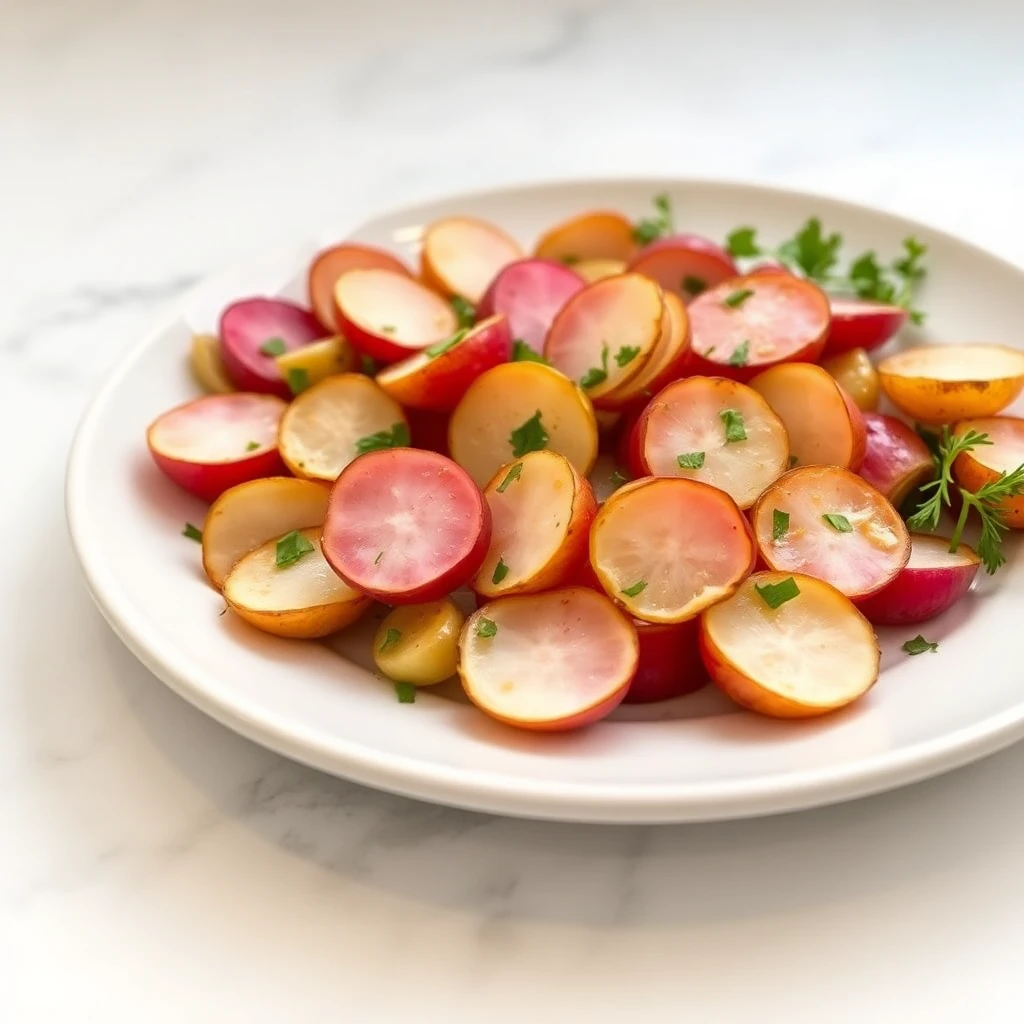
Roasted Radishes with Garlic and Herbs
Ingredients
Equipment
Method
- Preheat your oven to 400°F (200°C). Rinse the radishes thoroughly and pat them dry. Trim the tops and tails, then cut larger radishes in half if needed, keeping small radishes whole for even roasting.
- Place the radishes in a mixing bowl. Drizzle with olive oil and toss gently to coat evenly, ensuring they are well-glazed but not drenched.
- Add thinly sliced garlic and chopped herbs to the bowl. Toss again so the garlic and herbs are distributed throughout the radishes.
- Spread the radishes evenly on a baking sheet lined with parchment paper or a silicone mat. Make sure they are in a single layer to promote even caramelization.
- Bake in the preheated oven for about 20-25 minutes, until the radishes are tender when pierced with a fork and have developed some caramelized, golden edges.
- Remove the baking sheet from the oven and sprinkle with flaky sea salt and freshly cracked black pepper while still hot. Toss gently to distribute the seasoning evenly.
- If desired, squeeze a little lemon juice over the radishes for a bright, fresh contrast. Serve warm or at room temperature, enjoying their tender, smoky sweetness and aromatic herbs.
FAQs
1. How does roasting change radishes?
Roasted radishes develop a tender, slightly smoky interior with a hint of sweetness and earthy aroma, softening their sharp bite.
2. Which radishes are best for roasting?
Use small, firm radishes for even roasting and better flavor; large ones can turn watery and dull quickly.
3. How should I prepare garlic?
Thinly sliced garlic roasts evenly, becoming sweet and soft, without the bitter burnt edges that come from larger slices or uneven cuts.
4. Can I use dried herbs?
Fresh thyme or parsley add brightness and freshness, while dried herbs can turn dull and less fragrant after roasting.
5. What oil should I use?
A drizzle of good-quality olive oil helps caramelize the radishes, giving a glossy, slightly smoky finish; too much can make them greasy.
6. Should I add lemon?
Adding a squeeze of lemon right before serving brightens the dish, cutting through earthiness with a zesty citrus aroma.
7. When should I season the radishes?
If you forget to season after roasting, the flavors won’t be fully enhanced. Adjust salt and pepper once out of the oven for best taste.
8. How long can I store leftovers?
Roasted radishes can be stored in the fridge for up to 2 days. Reheat in a low oven until warm and fragrant, avoiding sogginess.
9. Can I freeze roasted radishes?
Freezing is not recommended; radishes become mushy. Keep them in the fridge and reheat gently for best texture.
10. Why is roasting radishes popular now?
Roasting radishes intensifies their natural sweetness and earthiness, creating a mellow, aromatic side that pairs well with hearty or fresh dishes.